Thursday, 1 October 2015

The British Empire - David Cameron drawing lines under history

In a state visit to Jamaica yesterday, David Cameron urged the country, along with other former British colonies in the Caribbean to 'move on' and forget about receiving reparations for slavery. These words were brushed off by the media as acceptable, and in the eyes of the British public they appear to be; with a YouGov survey conducted by this blog claiming 57% of Brits would oppose the principle of reparations being paid to former colonies.

The issue of paying for the past however does remain and has reared its head closer to home in recent months, with the news that the German debt to Greece from World War II exceeded the Greek debt to the European Central Bank by no less than 38 billion Euro. The Greeks however have since been coerced into accepting a structural adjustment package in order to receive a loan from the same people who owe them money, confusing to say the least.

The impact of colonialism upon Africa and the Caribbean is almost impossible to quantify. The human and physical capital extracted by Britain and others has done much to create the unequal global system which exists today, but David Cameron believes that bygones should be bygones in this instance and requesting reparations would be unjustifiable.

However, Jamaica is still crippled by its national debt. In the last decade, interest payments on this debt have exceeded the total tax revenue of the country and 45 percent of this package belongs to foreign creditors, including those in the UK. This debt, Mr Cameron believes, is not something which can be part of a forgotten past.

Since the election in 2015, Tory austerity has stepped up a gear, and policies like the sell off of the public stake in RBS for below its market value reflect the issue Jamaica faces. In the global political economy, there is one rule for the capitalist oligarchy of Western corporates, and another for those who built these places, be they workers in Britain, or the citizens of colonies in the Caribbean and Africa.


The economic policies of austerity; bailouts, quantitative easing and public sector cuts are a scam. They are a scam based upon the idea that money owed must be paid, and debt cannot simply be written off. As logical as this may seem, in practice debt is written off all the time, in 2008 when the banking system crashed, the debts of corporate banks were never collected, and Greece never received the debt it was owed from Germany.

Cameron's claim that Britain has repayed its debt by freeing the Jamaican people it enslaved in the first place is as ridiculous as it sounds. The reduction in national deficit at the cost of public services, while the rich are handed valuable assets (which the public paid to save) for pittance is as woeful a gift. The simple fact is that some don't have to play by the rules which have enforced suffering on the people, and simply draw a line under history and begin again after this point. So surely we can draw a line under debt and begin again now? Whether this happens in Jamaica or in the UK, or both, wouldn't that be the best solution?

Wednesday, 29 July 2015

Jeremy Corbyn: Not just the moral winner

Since Jeremy Corbyn rushed to a massive 22 point lead in the polls (according to a Labour Party internal poll reviewed by the Mirror) the right wing media and Blairite contingent within Labour have come out in force to explain how Corbyn would ‘destroy Labour’s electoral chances.’ His policy portfolio, bringing back the social democratic ideology which Labour was founded upon and reversing the party’s slide to the right since 1997 is seen as unrealistic by his critics and fatal to the political discourse which the Tories and his leadership opponents have adhered to.

Criticism of Corbyn has focussed upon two arguments. The first is that his policies will not work; the second that he will not be electable as leader in 2020. Concerns about his electability raised by his opponents centre around his refusal to follow the Conservative agenda on policy and accept the transition to the right which political discourse has taken since Blair.

The first argument, suggesting that his policies will not work, is an argument which must be tested relative to the functionality of the alternatives which his opponents propose. The suggestion for example that removing benefit caps and ensuring minimum provision for the poor, unemployed or ill will damage the economy too greatly to be seen as a valuable option presupposes that the 60 confirmed deaths due to Iain Duncan Smith’s reform of the welfare state are an acceptable cost against the benefit of economic growth. It supposes that the rapid growth of food bank dependence (41,000 people in 2010 to upwards of 1 million in 2015) is acceptable wastage from the pseudo capitalist system which both Corbyn’s Labour opponents and the Tories propose.

Furthermore, the supposition that rail renationalisation would fail asserts that a system with rising prices and poor service quality; due to the oligopoly of private providers which has developed since the 1980s is a functional model – and that Britain could not provide a service which Germany and Japan do perfectly well, and in the interests of the taxpayer.

Abandonment of Trident is also a sticking point for many, who believe that a nuclear deterrent is necessary in the modern world regardless of the moral arguments involved. One must question however, the logic of an independent missile system which cannot be discharged without USconsent. Particularly when it exists in a country which is so economically and tactically significant to the US that were they to abandon the system they would still enjoy the benefits of perpetual nuclear protection from a threat which continues to exist only in fiction, even were it to become fact.

Evidently, the argument that Corbyn’s policies could or would not work better than the current system is incredibly flawed. However this reality does not necessarily win elections and Labour supporters believe that having their party in power is necessary in order to provide a successful alternative to the Tories. As such the question of whether Corbyn is electable in the current climate is a significant one.

This argument can be dissected by understanding how his policies correlate with public opinion; and by understanding the main motivators behind which box the public cross on Election Day.

A YouGov study prior to the election found that the public overwhelmingly support renationalisation, or the continued nationalisation of hospitals; schools; rail; roads; prisons and the postal service. Crucially the survey offered the option for respondents to choose the option ‘whichever (national or private) maintains standards.’ Regardless of this option, the majority of the British public still want nationalisation for nationalisations sake. Therefore, far from being unelectable, Corbyn stands as the only Labour leadership contender with a populist policy on public services and utilities.

In addition to the objective popularity of the policy, Corbyn is the only candidate who directly opposes Cameron’s programme of NHS privatisation; increased use of academies and the sell off of Royal Mail. This is crucial when Labour placed fourth of the six main parties in an Ashcroft poll after the election on conveying genuine values and believable promises in what they would seek to do if elected. Corbyn offers a chance to put clear daylight between the two main parties and rediscover an identity which was clearly absent in the last election and saw rapid growth of other opposition parties who fared better in the poll.

Nationalisation and a removal of welfare state sanctions under Corbyn also offer solutions to the three main voter concerns in the last election – the NHS, job provision and the cost of living. By taking services under public control, utilities and infrastructure can be returned to the public good, both providing employment and controlling the cost of living. Reluctance to act drastically in this way has previously led Labour down the path of the Tory agenda despite the CLEAR POPULARITY of alternatives which the party traditionally identified with, to the detriment of the party. With 54% of the British public taking an anti-austerity stance after the election, this popularity is likely to grow.


Clearly Corbyn is a positive candidate, but the evidence shows he is also a functional and electable proposition. A break from the Westminster consensus would create clear, much needed daylight between Labour and Conservative and would break the steady slide to the right since Blair. The degree to which this is realistic can be seen in the furore created by a single poll, the right are running scared. Ultimately, regardless of the feasibility of Corbyn, voting against austerity and for equality is simply morally valuable, but there is no doubt that as well as being morally laudable, he is electorally significant. 

Monday, 13 July 2015

Redefining the Twelfth

After the events of this weekend again highlighted the vast shortcomings of the parades commission response, it is undoubtedly time to rethink the strategy which has dealt with parades, flags and the political situation created by the 'two communities' agenda which those in Stormont proliferate.

Restrictions on the materials burnt on bonfires across the North have not seen enough of a reduction in the danger created by the blazes, with towering infernos across the province collapsing onto revellers. This idiocy is shrugged off as DRD are sent out yet again to repair roads and assess the damage caused to local properties which the preventative efforts of the public purse have failed to protect in East and North Belfast. Stepping back from the adversarial debates of what one side gets over the other, the environmental and health impact of widespread celebratory arson seem blindingly obvious but cannot be dealt with in the blinkered world of orange vs green.

Squinting through the blurred lens that social media presents, where BBC photos of riot walls across the city and armies of riot police preparing for the same as last year are looked at as normal; it is obvious that something serious needs to change. The process towards peace which we're told we're doing so great at, as austerity is shoved down our throats from Westminster, seems to have reached a sticking point. A point which can only be moved on from by excavating the real definitions of normality, definitions which have been lost for a long time.

The first of these definitions is that of a festival. A period of celebration, and many do cling on to the culture and community which they believe the Twelfth celebrates, however those many would agree - when this belief inspires someone to drive a car into a crowd, maybe the celebrations have gotten out of hand. It has clearly become time to immediately redefine what the Twelfth celebrates, if those who celebrate it have any level of pride or respect for the culture it represents then they must show leadership and redefine that culture as something positive, not as something aggressive. Violent images of toppling fireballs and black gable walls, or riot vans and children dragged into ambulances do not gain respect for a celebration of culture.

It is time for both sides at Stormont to show leadership, to sacrifice the negative, aggressive and confrontational elements within both cultures and look for policy solutions which can allow these cultures to exist as positive commemorations of a troubled but vibrant past.

A blanket and enforced ban on political flags and symbols on public land would both show respect for the flags and emblems both sides claim to hold dear and reduce the sociological and environmental impact of regalia plastered over lampposts and kerbstones.

Vast restrictions on parades held on public highways, curtailing festivals and celebrations into an area in which they can be properly funded, properly policed and encouraged, and kept away from those who would seek to corrupt a celebration into something malicious. If a festival brings a community together then let it to that, in a contained place where those who wish to can celebrate their traditions without fear of encroachment or abusive elements, and without provoking others by forcing their message, rather than presenting it as something to be proud of and letting others learn in their own time.

There are clear answers if those who can take responsibility. If they understand that there will need to be sacrifices from all parties, if any are to gain an understanding of the traditions and cultures of the others. Unfortunately those who currently hold this power stand more to gain from the public purse by keeping cultures divided and corrupt than from bringing them together as pure forms of themselves. That can change before this festival comes around again if enough people stand up and say it should. There is always an alternative.

---------

This time last year this blog looked at the Orange Order and their impact upon maintaining the major division in our society, and how it hopes to continue to keep the working class divided to the detriment of both the Unionist and Nationalist worker. Read it here:

http://thetache.blogspot.co.uk/2014/07/the-12th-man-orange-order-vs-people.html

Tuesday, 23 June 2015

Welfare Reform at Stormont. Sinn Fein play acting and the need for answers.

As the debate over the Stormont budget rages on, and the threat of a return to direct rule looms closer, what is the future for anti austerity politics under the current system in Northern Ireland?

This week saw yet another apparent U turn from Sinn Fein on the Stormont budget. Having agreed in principle to a deal at the end of 2014, the now infamous Stormont House Agreement, the party then decided they would not support a budget on these terms as it did not guarantee current levels of welfare provision indefinitely. However, speaking at a meeting of his party's Ard Chomhairle at the weekend the Deputy First Minister said that, 

'in the context of the present situation in relation to the Budget Bill that we will be giving conditional support to this Budget Bill today.'

So Sinn Fein don't agree with the budget, but they'll support it, and then apparently renegotiate it at some later stage? It seems that the party's PR game has gotten quite muddled now that the thing that they present as their primary success - Stormont - looks to be under threat due to its consistent malfunctioning. The simple fact is that the Assembly has not successfully governed or significantly improved the North since its inception, and its weaknesses are becoming increasingly apparent as being 'better than the bad old days' is no longer seen as good enough. 

The Sinn Fein/DUP modus operandi of making a big show of the debate between themselves in the knowledge that they won't affect each other at the ballot box, while cooperating up on the hill in their carve up of budgets, protection of party interests and expenses gravy train has been a direct result of the mandatory coalition system. Flip flopping over welfare reform is simply a reflection of Sinn Fein's need to keep the Assembly gravy train on the tracks, while not being seen to openly cooperate with the Tories or DUP. 

With the unionist benches and Alliance all openly accepting of welfare reform and the austerity line; and the SDLP continuing their tactic of saying nothing radical or interesting on the big issues in the hope that they don't become any less relevant than they already are, it seems that collapsing Stormont and opening the North up to the pain of direct Tory rule might be the best case scenario. The political play acting on the hill which the current system provides won't offer solutions, and a rethink is clearly necessary if genuine opposition to austerity can exist the way it does in Scotland.

Thursday, 2 April 2015

16 Conclusions on the Leaders' Debate

Having watched arguably the biggest fixture in the run up to the general election - the leader's debate amongst the seven major parties. I thought a post game analysis would be appropriate, so to steal an idea from the people who do it best, here are 16 conclusions on the leaders debates:
The leaders' debate, available on itv.com

1 - As much as you can hate Nigel Farage for his abhorrent policies and sliminess, his style works with those who are likely to vote for him. He knows where he's good and where he can make gains and the sort of people who don't care about AIDS victims will love that 'someone has said what we're all thinking': you can't argue with his 21% leading performance polling.

2 - Equally, as well as Farage faired, it must be nearing the end for Bennett unless there is a huge turnaround on election day. This added to a long line of poor media appearances over the last few months and she really missed an opportunity to voice the Green alternative on a big stage.

3 - Miliband said an awful lot yet managed to say very little. Labour continue to bottom feed off other parties as they have in the past and battle for marginal policy differences so as to attempt to occupy the middle ground, unconvincing and lacking in principle.

4 - Tactical challenges between the Westminster neoliberal consensus was boring. None of the three major leaders said much about their parties' own policies, yet challenged the other two constantly in order to appear the alpha male on TV.

5 - In this playground battle of the supposed alpha males, Nicola Sturgeon wrecked the place. Stood back from pettiness in order to express genuine values and a proven record of governance and was the clear winner of the debate.

6 - Sturgeon's success was attributed to the female presence so absent from the Westminster political debate (May doesn't classify as human never mind female). Whilst this is a hugely valid point, another inference which can be made from the SNP leader's success is that people want a genuine left alternative, Labour have abandoned their post long ago and the SNP are more than happy to fill it.

7 - The positive response to the female leaders was somewhat misplaced however, Bennett's performance was patchy at best and Leanne Wood appeared to ride on the coat tails of Sturgeon, falling into the trap of complaining about austerity without posing genuine alternatives.

8 - Nick Clegg performed better than many would have predicted, however his ridiculous assertion that he 'did the best he could' on tuition fees; by totally reversing his initial policy and supporting the ridiculous and destructive Tory policy through parliament was bordering on comedy.

9 - Towards the end of the debate, a member of the audience confronted Cameron during his point in support of the armed services regarding his government's less than humane support of veterans. This election is increasingly becoming a Tory standoff against the rest of society.

10 - Principles are in short supply amongst the major parties. This is what makes people like Sturgeon and Farage stand out, and what gives Cameron his lead in the polls. Despite the divisive nature of some of their policies on nuclear arms, immigration and welfare respectively, standing for something stands you apart. Labour would do well to follow suit.

11 - Fear is the currency of this election, scare tactics have replaced principle among the 'Big Three' and Cameron's hope is that people can be scared off alternatives such as the nationalist parties, Greens and UKIP enough to give him a majority, his own popularity won't achieve this so he'll try and scare people about the break up of the Union or rise of some new fascism.

12 - Should the Tories fail to convince masses of idiots and wealthy scumbags that they're 'the only party who can govern' it will likely be some form of coalition rule. Maybe Nick hasn't done too badly, his party could end up providing the only returning government ministers, but if he carries on like this none of the nice girls are going to dance with him for much longer.

13 - To paraphrase Butch Coolidge, there is an incredibly high chance that Ed's dead.

14 - As predicted by this blog, (http://thetache.blogspot.co.uk/2015/02/the-green-debate-more-harm-than-good.html) Cameron will be very happy with how the 7 person format played out, there was a lack of proper grilling and this will always benefit the incumbent.

15 - Voting really doesn't help that much. There has been huge criticism of Russell Brand and his advocacy for voter apathy along with activism outside the mainstream political narrative. There was little to be convinced by on this showing by the establishment, and other options are at least worth looking at.

16 - Julie Etchingham was a let down as host, similarly to Kay Burley's horrendous bias on Channel 4's town hall debate last week the broadcasters have not performed to a high level. Etchingham allowed various speakers out of time and did not scrutinise the participants effectively.

Friday, 20 March 2015

Things We Won't Say About Race: The Tory War on Multiculturalism

Last night Channel Four premiered Trevor Phillip's documentary 'Things we won't say about race that are true.' In the documentary, the former equality advisor to the New Labour administration looked at various trends regarding race related crime, academic performance and social issues and exposed some important truths. The interesting thing about these truths are the government's plans to universally ignore them and proceed with a policy agenda which seeks to maintain the class and racial barriers to a better UK.

Trevor Phillips
The promotion of 'free schools' under this government has been part of the core message of the ultra free market manifesto pushed by the current Tory leadership and brings yet another public service out of direct government control. The key factor within this policy which affects race is the allowance for 'faith schools' - government funded religious schools managed not by local authorities, but by church and parent leaders. In his documentary last night, Mr Phillips showed clear empirical evidence that as humans, we welcome what is familiar and simple and that this leads to a propensity for voluntary segregation. Whilst governments cannot holistically legislate against this in terms of housing, where private housing areas will naturally allow communities to congregate - education offers a means to change attitudes and break down racial barriers.

Allowance for faith schools, as opposed to comprehensive education amounts to allowance for segregation and the damage this does to communities. Look, for example, at the accusations of muslim faith schools radicalising teenagers, this question does not need to be asked in a country which forces communication and shared learning in its schools. Cultural issues such as racism and otherness are naturally weakened if schools are designed in such a way as to include a broad racial mix. This has been tried and tested in some schools in the UK - again highlighted by the documentary, where the needs of different groups are monitored and acted upon in order to maximise both assimilation and performance.

Nicky Morgan: Tory education secretary,
better future for whom?
There are clear and observable examples of racial discrimination in jobs (those with anglo saxon names get more callbacks from CV submissions), and the lack of certain social groups - including women, in top jobs. These factors can clearly be combatted by eliminating schools which discriminate on the basis of sex or religion. Those in private education have a statistically better chance of reaching university as compared to others, and there is a growing trend amongst ethnic minority groups to do better academically than white British working class people. The introduction of free schools, promoting segregation into these groups, will only squeeze those at the bottom more and create greater inequality and tension within society.

Look, for example,
at Northern Ireland. In the only sector in the United Kingdom which still widely uses faith and grammar schools, we see the lowest performing social group in the country - working class Protestant boys. The selection system in Northern Ireland has statistically been shown to help middle class children succeed at a higher rate and the Catholic maintained sector - with its extra funding and selective process - to outperform the state sector. This leaves those who enter the state sector, namely non Catholic working class people at a blatant disadvantage.

Reluctance to change the education system in Northern Ireland is a whole separate issue based on a whole separate set of political biases and a whole different lack of values. However looking at the clear evidence of the results such a system produces, a regression to a similar divisive and corruptive system in the UK is a road which will only serve to entrench David Cameron's friends in power and worsen the state of the nation. Fight free schools, fight private schools, fight racism and inequality.

Comments in the section below.

Wednesday, 11 February 2015

What they want you to think. Chapel Hill.

Last night three muslim students were shot dead in Chapel Hill, North Carolina. The killings were carried out by a white, American, atheist male who claimed on twitter that, 'When it comes to insults, your religion started this, not me. If your religion kept its big mouth shut, so would I.'

You may not be aware of these events at such an early stage, although I hope that they will be well reported on the news across the UK and Europe, and the actions of this man scrutinised as seriously as the hate crimes of the Kouachi brothers who carried out the Charlie Hebdo attacks. Unfortunately so far this has not been the case.

It appears abundantly clear that this killer has acted upon anti Islamic feeling to carry out such a heinous act against three individuals who appear to have done nothing to him. There are clear parallels with the hate crimes of the Kouachi brothers, although arguably these victims are more innocent than the Hebdo cartoonists. These parallels have not however been covered by the Western media to nearly the same degree. 

When Hebdo happened, rolling news broadcasts focussed on footage of the shooting of a policeman. They speculated over connections to ISIS which didn't exist and then followed the obvious demand for increased securitisation leading Cameron to indicate he may ban or drastically increase monitoring of some forms of communication. When Chapel Hill happened (today), the story did not appear on the BBC News homepage, however a story discussing how Belgium have jailed Islamists did appear. Why is this?


The reasons for this are simple, fear of Islamism makes sense for Western governments; when these events happen, it helps to connect them to events in the middle east and promote fear of muslim culture among our communities. When events like the Charlie Hebdo killings happen, widespread news coverage helps to promote an anti extremist fervour and allow arms companies to make money from escalating war. Arms companies which ex government ministers, and government donors have stakes in. This propaganda, and that is what it is, allows the capitalist class to gain from war in the middle east and the subsequent securing of assets. It allows the political class to capitalise on our fear and increase security - as this blog correctly predicted following the Hebdo shootings.


The complete disparity in coverage in two very similar atrocities, which both happened in the West and both included multiple civilian casualties is a clear indication of the agenda driven corporate media. This man stands for atheists and the West as little as the Kouachi brothers stand for Islam or the muslim world. Making connections between the actions of ISIS in the middle east and the actions of a few lunatics in Paris is the same as making connections between the actions of a lunatic in North Carolina and you.

Many laugh at and ridicule the pantomime that is Fox News in America, their propaganda is transparent and easy to observe and ignore, but Fox is not the only organisation which puts across this message. It isn't even the only news organisation with that particular owner (a few of his papers in the UK declined to report on this incident today, it appeared low down on his news website's homepage). Observe this disparity in all of the mainstream media, understand why it happens. Capitalists in the UK have an agenda, it isn't one which benefits normal people either here or in the middle east. Until power is taken away from these people by turning your support away from the people in power (including the ones who aren't in government this minute) and forcibly taking power away from those who control these institutions our society will continue to make these same mistakes and hold onto this same hypocrisy.

Thursday, 5 February 2015

The Green Debate: More harm than good.

When David Cameron came out to request the inclusion of the Green Party in the upcoming TV leaders' debates, many from the Green-left cheered. It was assumed that this gave a platform to a real alternative and would catapult the party into mainstream success. This unfortunately is unlikely to be the case.

The Green Party themselves have been quoted as saying they are targeting twelve seats as potential gains, with six seats being a reasonable estimate for what they could realistically hope to win. Considering the limitations of the party's estimates, it is clear they do not expect to be a major player in the next parliament.

It is for this reason that Cameron's request is not a laudable example of political inclusivity, but a piece of tactical genius. In welcoming the Greens into the TV debates, Cameron has opened the door to legal protestations from the SNP, Plaid Cymru, the DUP, Sinn Féin, the SDLP and Respect. Inclusion of the Green Party in TV debates means that based on broadcaster neutrality, all of these parties have a right to equal representation based on their representation in the House of Commons.

In promoting the inclusion of the Greens, and allowing the door to open to all of the minor parties within the House; Cameron has successfully created a debate scenario wherein the majority of messages become drowned out in a cacophony of alternative opinion. I think many would agree that nationalist and regional parties, who are now to be included in the debates, do not offer any value to a UK wide discussion on policy, as they do not seek support or have support in the majority of the union.

What these parties do serve to do however, is create confusion. In a leader's debate format, discussion on a number of issues will take place over a very short time - the previous discussions were over a 90 minute period. Were the parties to each cover their stance on health, education and the economy in this time, each leader would have just over four minutes to speak on each issue, disregarding time for questioning, retort and actual debate to ensue.


This move by Cameron to bring in minor parties, many of whom are irrelevant in the majority of constituencies serves to protect him from any criticism regarding the destruction he has carried out on the UK in the last five years. In such a limited space, it is unlikely at best that he will face any real critique on his failures in government, or be required to make any explanation of why he has begun to destroy the NHS without a mandate to do so; or increased the UK debt whilst pushing many low income families into food banks. The inclusion of the Greens has had a knock on effect of turning the debate into a circus, in which Cameron the clown becomes an entertaining option.

Within such a chaotic debate it is unlikely the Greens will get any real platform to promote themselves, and they will likely win few votes from the appearance. What their appearance, admittedly along with the SNP and Plaid Cymru will do is cause confusion. What confusion will do will cause worry among voters who have not been conveyed any understanding of complex policy issues and the respective solutions of the parties on what is the ONLY piece of media in this election which will likely reach a mass market. 

Unfortunately, what this worry will do is cause a retreat to the safety of familiarity, and likely promote the option of the Conservatives where a debate offering real criticism would damage them. The Tories remain the only party who have public confidence in their ability to run the economy, which whilst baffling is a huge tool for them, particularly in an arena such as this debate. Napoleon said that the winner will be he who controls chaos, and that is exactly what Cameron is trying to do here.

Do you agree? Leave your opinions in the comments.

Thursday, 8 January 2015

Without Freedom of speech we are dead - Charlie Hebdo and holding onto freedom

“Our job is not to defend freedom of speech but without it we’re dead. We can’t live in a country without freedom of speech. I prefer to die than to live like a rat,” These were the 2012 words of murdered Charlie Hebdo editor Stephane Charbonnier. Following the Paris attacks, particularly in their proximity to the Sydney hostage situation, his words are incredibly important for the people of Europe.

The two suspects currently being chased through France are known religious fundamentalist militant activists; one had already been imprisoned for sending jihadists to the middle east - while the other wasn't prosecuted due to lack of evidence. Similarly, the man who took hostages in Sydney was known to be a militant Islamist, with several prior convictions and mental illnesses on record. 

Yet the reaction from the Austrailian government, mirrored the reactions seen before in London after 7/7, and in the US after 9/11 - securitisation.

Australian PM Tony Abbott, speaking after the attacks in Sydney talked of closer monitoring of communications, more security, greater restrictions on freedoms particularly on communication. This was called for despite the acknowledgement that the perpetrator, like in Paris, was a known entity who was already under police observation. This is clearly not the answer and we have to hope that greater limitations on the freedoms that Stephane Charbonnier was prepared to die for are not what Francois Hollande asks for in the wake of new attacks.

This blog has talked before about the anti Islamic agenda coming from the West (links below) and undoubtedly an antipathy towards muslims in France has contributed to this attack. Growing tensions promoted by the likes of Nigel Farage and Marie Le Pen - the latter calling Islam a 'murderous ideology' today - create fear and division amongst communities. Wild speculation with no foundations (as seen on Sky News), linking the attackers in both incidents to ISIS, the Arab Spring revolutions, or to the wars in Iraq and Afghanistan fuel fear and confusion and exhibit the base irresponsibility which is rife in our current media. 

Two men in a nation of 66 million do not represent an ideology or religion. When faced with the horror of events like these it is wrong to surrender to fear and relinquish freedom. Promote compassion and a response which weakens extremism of all kinds, whether it comes from Le Pen or al-Baghdadi and we can genuinely stop these attacks. What's your opinion on dealing with the attacks? Leave your comments below.

http://thetache.blogspot.co.uk/2014/09/is-there-anti-islamic-agenda-in-uk.html

#illridewithyou

Saturday, 3 January 2015

Royal Pains: Why we need to end the monarchy

Almost 40 years ago the Sex Pistols released their single 'God Save the Queen' - at the time many accused the UK singles chart of fixing the result so as to keep it at number 2, similarly to the censorship around the wizard of Oz single used to celebrate the death of Margaret Thatcher. Almost 40 years on, the British Royal family remain an unassailable danger to society.

Many argue the 'benefits' of the Royals saying that the attention surrounding the royal baby and tourism which the family bring to Britain make them worthwhile - and that their political power is non existent in a modern
constitutional monarchy. However in recent years under Cameron's Tory coalition additional protection has been given to the Royals and their powers to extract a salary from the exchequer for the minimal work they actually do.

The dangers of the family are not limited to their pow
ers to steal from the public purse without any scrutiny, in the first 3 years of the coalition government Prince Charles had 36 meetings with cabinet ministers, 9 of which were with the
Prime Minister himself. Considering the extra protections afforded to the Royals by this government, it would be incredibly naive to believe these meetings do not indicate a clear influence on the government from the Palace.

So a family who consistently take large amounts of money from the taxpayer, who come from an environment where preservation of wealth and maintenance of the inequalities in society only serve to benefit them, their families, the people they went to school with and are surrounded by are a positive thing for society? This is incredibly doubtful. Of course, the same could be said for the government they advise, but at least in that case democracy forces them to put up some sort of facade that they care about the rest of us.

Recent revelations about suspected child abuse from Prince Andrew serve only to bring to the fore the various evils which the family represent, and to create a better more equal Britain, they have to go.

Thursday, 18 December 2014

Sinn Fein: The Trojan Horse of good Government

The insulting comments made by DUP MLA Gregory Campbell last month on the Irish language undoubtedly let himself and his party down - the party's opposition to the Irish language act has prevented society developing a unified culture in the North. However the response of Sinn Fein President Gerry Adams reveals much more about the parties in government at Stormont.

'The point is to actually break these bastards - that's the point. And what's going to break them is equality. [...] that's the Trojan horse of the entire republican strategy is to reach out to people on the basis of equality.' 

The message here from the Sinn Fein leader exposes what many have acknowledged for some time with his party. Their main target is electoral supremacy and building an equal society in the North is merely a front. Whilst their partners in leadership, the DUP have made no effort to present themselves as a 'party for the people' promoting welfare and social development - SF have consistently put themselves across as a left wing party looking to build a better society in this part of Ireland.

Quotes here however add to what is already a litany of corruption from the party. They were exposed last year for housing trade offs with the democratic unionists, used to maintain their respective electoral dominance in Newry & South Armagh and North Belfast. Clearly it is acceptable for these parties to ignore the needs of local people in order to retain electoral supremacy.

Further to this, the party were also recently exposed to have set up questionable means of payment to their constituency offices, allowing money to flow into the coffers of party members in 'research' companies where research does not seem to have taken place through their assembly expenses claims. Education minister John O'Dowd then claimed that 'the only audit that matters to Sinn Fein are the voters(sic)'. This ignorance of the importance of following public procedure in order to save the taxpayer money is another indication of the party's lack of interest in proper governance.

The admission of the Party President along with the multiple incidents of corrupt behaviour surely should have set off alarm bells. The continuation of a toxic ‘two communities’ housing strategy, total ignorance over necessary budgetary changes, combined with the refusal to implement a policy of integrated education – as stipulated in the Belfast Agreement – leads us to the conclusion that Sinn Fein is not a party who is trying to build a better, more equal society. It is a party which cares only for the weight of its own pockets and maintenance of its own vote.

Thursday, 4 December 2014

Feminism and equality: The Private Sphere

The sex discrimination act of 1975, and the progress that women in the workplace have made since has done a great deal to address gender inequality in the UK. Women now make up over 47% of the workplace, a 10% rise since the act was introduced. We have increasing parity of esteem between people of various and no gender in society today. But how can the next step be taken?

Much of feminist thought centres on the politics of the personal - of accessing the things in private life which a society run by men always ignored. I think we can all agree on the massive value conferred on us by those who fed, cared for and reared us as children, and provided for our family within the home. The role of the carer, traditionally occupied by women in the past caused difficulties, and continues to create difficulties for women who wish to enter public life. Notably in recent months, UKIP leader Nigel Farage declared that women are of less value than men in the workplace as they may leave full time employment due to pregnancy or childcare needs. I would contest that the value is stored somewhere else, and that in order to balance personal value in the public sphere, we must do so in the private.

Provision of childcare allowances by government go some way to alleviating the perceived need for women to look after children, but the stigma of the female parent as holding primary responsibility for childcare still holds many driven and intelligent women back. Another solution could be to look at equality again, but in the private sphere of childcare. In UK law, the father of a child ONLY has parental responsibility if he cosigns the birth certificate as either a married or unmarried partner, or applies for parental responsibility through the court system. The mother has these rights automatically. I would contest this is incorrect, unfair, and damaging to gender equality.

Similarly, in cases of family breakdown, the mother takes primacy in custody arrangements, with access granted to the father based on her wishes. This attachment of the role of carer to the mother helps to perpetuate gender roles and entrench inequality. By treating parents as equals, and debating custody from this new standpoint, we increase the responsibility of all gender roles in private life and allow for real equality.

Were we to change such a law, and take primary custody and responsibility away from mothers, placing the responsibility for a child (once born) in the hands of both parents - this could help to alleviate the poisonous stigma attaching women to the private sphere and preventing their growth in public life. By placing responsibility in the hands of fathers to take part in childcare, to be an equal partner in private and public life we could bring families and gender equality into the 21st century.

Families today come in various shapes and sizes, and by addressing inequality in family life we can better address the inequalities which remain in public life. By giving fathers parity of esteem in custody arrangements, and in doing this conferring upon them the responsibilities of equal parenthood we can better achieve gender equality for all.

What are your thoughts? Please leave your comments below and share.

Sunday, 9 November 2014

Poppy Fascism and why it's right to object.

With today being Remembrance Sunday, the past week or so have seen the annual return of the Poppy appeal to our daily lives. In recent years, the image and event surrounding it has become implanted into everyday life - football clubs at every level of competition across the UK have committed to a minutes silence before the game, and to wearing poppies on their shirts, actively supporting the appeal; with a few notable objectors, and television personalities are coerced into wearing the symbol on many national broadcasts.

Wigan winger McClean claimed to have
'sparked fury' through his conscientious
objection to the appeal.
Such support however, and the bile thrown at objectors such as James McClean in backlash to his refusal to wear a Poppy is now bordering on fascism. Contrary to the belief of many, the appeal does not seek to commemorate those who lost their lives in the two world wars early in the century, but to donate money to all British servicemen living or dead. Since conscription ended in 1960, this amounts to support of all those people who chose, not people who were forced, to go to war. These wars include the attempts by Britain to retain control of Northern Ireland; the Falklands; their intervention in the four Iraq wars and the war in Afghanistan on the back of Bush's 'War on Terror' speech. Through the blanket imposition of the Poppy in national culture and daily life, the appeal attempts to drum up tacit consent to the actions of these people.

This attempt to use the plight of dead soldiers families and the legacy of the holocaust to create a feeling of support for the current actions of the armed forces amounts to fascism. Promotion of support particularly for Cameron's continued support of Israel abroad and further intervention into Iraq and Syria promotes imperialist notions which Britain should be trying to get away from.

But it's about helping the soldiers and their families. On the British Legion's Poppy appeal website, the goals of the Poppy appeal include helping, 'younger veterans who need employment and housing to live on.' Why should the British people support a system wherein working age veterans, who have left the military for one reason or another, require charity to afford housing? Support of the military in Britain today: a country which despite what the media propose is under no direct threat from outside invaders, and will likely continue not to be: amounts to support of a continued imperialist approach abroad, continued intervention in places like Northern Ireland and the middle east, places where past intervention only served to make things worse, and continued support of a system which does not even attempt to care for its veterans - it expects the public to do so through charity.

It is time to take off the Poppy, and to abandon support for militaristic regimes and those who support Britain's constant intervention in issues which it cannot and has not helped solve. What do you think? Please leave your comments in the discussion below.

Tuesday, 16 September 2014

Ian Paisley and other relics of the past

A recent article in the Guardian acknowledged the tributes to Ian Paisley after his death as being privy to the theory of 'live long enough and all is forgiven'. The media coverage surrounding his death focused on Paisley as a peacemaker, with David Cameron saying he would be remembered as the ''big man' of Northern Ireland politics' and would be 'greatly missed'. This is a far cry from the images of Paisley as a flat track bully, whose violent rhetoric inspired a far right stance amongst unionism throughout the early peace process. Further to this, the Reverend for a long time backed loyalist paramilitarism in its defence of a mid 20th century political system which even the staunchest supporter of the union would now admit was unjust and unethical. His passing is the passing of a relic which the political mindset of the North must move on from, but many others remain.

The death of Paisley and the obituaries which followed in the mainstream media, have highlighted many important ideas for those who hope the North can progress from its current malaise. His deposition by those who now run the DUP was well covered by the media earlier this year and shows the deep underlying issues which exist within the NI Assembly. As was heartily discussed at the time, Paisley had overstayed his usefulness to the DUP, faced with the rise of TUV they removed him so as to retain their position as the hardiest defenders of the union.

Success in the following election then allowed them to maintain a power base from which they instituted the Red Sky scandal, giving public finances to DUP donors whilst they destroyed housing executive property. Nelson McCausland (DSD minister at the time) further proved his superior usefulness in social housing trade offs with Sinn Féin, perpetuating the electoral majority of key party members, some of whom had led the deposition of the party founder.

This failure to progress to a consensus based system where parties set a joint agenda for the good of the people - as opposed to the current bilateral strategies based on maintaining the electoral relevance of green and blue parties is a deep wound in the system which sees no signs of healing under the leadership of the current incumbents of the OFMDFM.

Paisley's disposal at the hands of those who now lead the DUP has not however succeeded to maintain their unchallenged position as dictators of the agenda which the loyalist vote follows. Failures of the party to manage PR and promote new changes such as the removal of flags and symbols; growing multiculturalism in the North with the influx of new ethnocultural groups; and the secularisation of public policy with movements towards equal marriage based on sexual orientation has led to the growth of a new far right element in Loyalism. The growth of the 'Protestant Coalition' outlook from Loyalism is undoubtedly a consequence of disastrous management by an adversarial party in a political system based on progressive consensus and tolerance. This consensus, due to the leadership of Sinn Féin and the DUP has given way to stand off and trade off.

Peter Robinson was quoted earlier this week as saying the Stormont system was 'no longer fit for purpose' and he would look to the Westminster government to engage in further talks for a solution. This comes less than a year after the huge amount of money spent bringing in US diplomat Richard Haass offered no results in solving issues over flags, parades and dealing with the past. This unveils a basic incompetence in the leadership of the Stormont executive.

DUP failure to properly lead in the progressive changes to policy on flags and symbols which must take place to become a less confrontational society, failure to govern in a responsible way which benefits the people, and failure to come up with any solutions to the problems they are paid to solve leads to a simple conclusion. Paisley is a relic which the North are better moving on from, but he is not the only one, until the relics still sitting in the executive office on the hill are also disposed of, progress cannot be made. We can't however wait until they dispose of themselves as they did with the Doc, the people of the North must stand up to the relics in OFMDFM, in Sinn Féin and in the DUP and take a leaf from Reverend. Ulster must say no to the powers that be or we will 'never, never' move on and become the fantastic multicultural, tolerant society we believe we can be.

Wednesday, 3 September 2014

Is there an anti Islamic agenda in the UK?

Anyone watching the BBC news this evening would have seen their propaganda machine in full flow, in outlining of the structure of the Islamic State, quotes such as 'married to sister' were casually interspersed with the relevant information being conveyed - pictures of a crying British mother shown while a solicitor read a statement about her daughter's indoctrination into IS.

An executive who confirmed they would offer only humanitarian aid to fighters in Iraq only a few weeks ago are now fully involved in a system of air strikes against IS and the leaders of both government and opposition are proposing a tough response to the fighting; suggestions even being made that passports of UK muslims who travel to Syria could be revoked. We have always been at war with Eastasia.

This draconian response, cracking down on those who offer aid in Syria is not new, post 9/11 the Blair government used invocation of a state of emergency to pass the anti terrorism, crime and security act (ATCS act) - the most drastic reaction of any European state to an attack which took place on a different continent. The ATCS act allows the UK to indefinitely intern those suspected of 'terror charges' pending deportation, whether that deportation was granted or not. This new policy of revoking the passports of even British nationals suspected of such is an extension of the draconian, authoritarian school of thought in dealing with the threat of fundamentalism.

But is this reaction based on previous successes? Succinctly, no, since the ATCS act was brought in in 2001, stop and searches amongst the muslim community have increased drastically, anti immigration politics has come to the fore electorally and parties such as UKIP and the BNP have gained widespread support at local level. The demonisation of the muslim people in Britain as an 'enemy within' has been motivated by the increased securitisation and aggressive foreign policy implemented by the Blair government and now continued by the coalition.

This culture of fear has not been allayed in many cases by the mainstream media within Britain. Of course the main news outlets such as News International and BSkyB distribute a 'Fox-lite' geared towards the conservative elements within UK society, but other more traditionally balanced outlets such as the BBC fail in their depictions of society in many cases as well, as outlined in the beginning of this article.

Choudary on the Immigration Row
https://www.youtube.com/watch?v=pJxn8AYtfq8
There is a major issue in Britain at the minute with framing the arguments of fundamentalist Islam. In Channel 5's 'Big Immigration Row', muslim cleric Anjem Choudary was introduced to the audience as, 'radical muslim Anjem Choudary, hate figure to some as you may hear,' as jeers were thrown from the studio audience. Whilst the author would not give support to the perspective of Islam held by Choudary, framing him in this light drastically dilutes his ability to convey any perspective whatsoever, the message that the killing of Lee Rigby in Woolwich was at least partially motivated by the global nature of the 'war on terror' which Britain has got itself involved in. This lack of interest in understanding the motivations of radical Islam generates hate towards the normal, functioning members of British society.

The ignorance of the mainstream media in helping us understand the motivations of IS and others in a rational and balanced way remains a problem in the ongoing and escalating conflict, and allows for the situation to continue to escalate; with liberal values of the multicultural, tolerant society we aim to build giving way to securitisation and marginalisation of some within our communities. Bourgeois conservative David Cameron, hate figure to some as you may hear does not seem to be leading us out of this mess.

Do you agree? Leave your comments below.

Thursday, 28 August 2014

Should University fees reflect Vocational Utility?

The fees hike imposed by the Tory government in their first year in power has been one of the most controversial reflections of the failings in the UK democratic system. Turning their back on pre election pledges the Liberal Democrats sold off a huge amount of their voter base, and are unlikely to perform well in the forthcoming election. But how do fees impact ordinary people? Both through the tax money afforded to the exchequer and the huge debt placed upon individuals, Cameron's neoliberal philosophy for further education is proving to be wrong in so many ways.

The restructuring of the student loan system and fee repayment was intended as part of Cameron's austerity measures to 'cut the deficit' and balance the books, however the huge debt placed on those taking less prestigious courses has ultimately not been repayed to the exchequer and as such the government lose out on more than under the previous system. Since implementation
of the new system the percentage of loan money written off due to non payment has risen by over 20%. More than half of the monies loaned is not being collected due to the lack of real value gained by many courses, as graduates fail to earn enough to repay based on the lending agreement.

So what is the solution? Vocational utility with regards to degree courses offer an alternative which tailors the education system more successfully to the job market. It is a simple projection to say that much of the money lost by the exchequer in write offs is lost from less prestigious courses which do not have adequate vocational utility. For instance, computer science related courses had a 10% unemployment rate in the last statistics released, based on this estimation, the courses which have a clear low employment rate and graduate earning potential could be charged more in tuition, in order to dissuade people from taking on these courses: whereas courses such as law and education, which have a very high employment rate, could be charged less in fees.
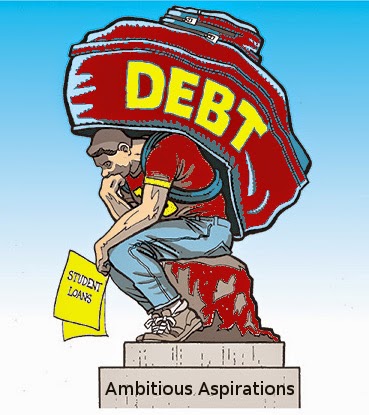
This would push exceptional students into courses which benefit the jobs market as we have exceptional people in competitive arenas. It would also serve to weaken the philosophy introduced by New Labour that University is the best option for the majority of students. Many courses introduced in the last 15 years do not reflect value in the jobs market particularly with the need for tuition induced debt. A tuition system better tailored to the changing job market in the UK would offer high performers a better deal, intelligent students who make good decisions about future markets better vocational utility and would make those who University may not be the best option for look more at other options. We need a system which educates people that University is an option amongst many, not the option over all others.

Do you agree? Leave your comments below.

Wednesday, 13 August 2014

Sunshine on Leith: Scottish Independence and a revitalised left.

As we approach the referendum on Scottish independence in September 2014, many have argued the practicalities of an independent Scotland, with the major parties in Westminster claiming that they would deny Scotland the pound in an attempt to scare off voters worried about Scotland's economic stability were they to 'go it alone'. These practicalities have been defended and argued by Scottish politicians, calling Westminster's bluff on whether it would devalue the pound by ejecting Scotland in such a manner, but it is not the practicality of freedom Scotland should worry about.

The wealth of benefits Scotland would take from independence are varied and important. Becoming a non-nuclear state, joining the majority of the rest of the world and in realist terms, decreasing the risk to itself from outside powers as it steps back from international politics to focus on development at home is one, it's ability to cultivate Scottish resources for the benefit of Scots and to develop its own relationships with the rest of Europe are others. Most importantly however, the electoral makeup of the Scottish Parliament sees 55% of MSPs coming from the 'left' of the m
ain parties in Westminster (SNP and the Green Party). With only 15 members from the far right conservatives. Whilst the SNP and Labour wouldn't be described as 'real' lefty parties, they promote a far more social democratic ideology than the Westminster leadership, and Scottish Labour electorally see much of their support coming from traditional, pre-Blair labourites as opposed to new, neoliberal labour in the south. The dominance of more social democratic parties in Scotland offers hope not only for an independent Scotland, but for the whole of Britain. 

The abandonment of Clause 4 and the socialist principles of the labour party by Blair in order to make the party appeal to the middle ground in England is something which has damaged the left in Westminster, this doesn't look to be changing anytime soon - Miliband today still subscribes to privatisation of major public services and a largely neoliberal economic strategy. This abandonment of socialist priniciples by the traditional left leadership in Britain, coupled with the difficulties posed by the first past the post electoral system in allowing for small party growth to affect real change has meant the UK parliament is virtually devoid of any strong left wing voice in voting terms. Aside from relics of old labour who still occupy back benches such as Dennis Skinner, who has recently been voted off labour's party council, and single activists such as George Galloway, the House of Commons is almost devoid of any lefty voices. But this could all change should Scotland gain independence.

The development projects which the SNP have promoted as the benefits of an independent Scotland will, if enacted, provide stark contrast to the austerity being imposed on England and Wales. Social development in Scotland and a growing state, contrasted with rising costs in higher education, and social budgets being slashed south of the border could create a shop window effect which has the potential to revitalise the weak left in Westminster. It may get worse before it gets better, but sunshine on leith could provide a new dawn for the rest of Britain.

What do you think? Leave your comments below.

Friday, 18 July 2014

The Assault on Gaza and a New Soluton


The recent assault on Gaza inspired by the killings of three Israeli teenagers in June of this year have led to a huge swell in support for the people of Gaza and Palestine from many sources in the West. An initial continuation of the BBC's pro Israeli stance has now weakened with some more balanced coverage coming from many Western media outlets.

Image from ICAHD illustrating Israeli
demolition of Palestinian homes
Since the beginning of the Israeli assault on the Gaza strip, 'Operation Protective Edge', the death toll in Gaza tops 200. The densely populated area has been constantly bombarded by airstrikes leaving many innocents dead, yet the idea of sanctions against Israel has not appeared as an option for Western allies. John Kerry has called only for ceasefire talks between both sides with Obama promoting Egypt as a power broker due to their new President being 'less conciliatory towards Hamas' than his predecessor. This seems a weak response to a conflict which has seen no Israeli deaths from Palestinian rocket attacks (CNN) compared to such large amounts of civilian casualties on the Palestinian side. Continued support for the Netanyahu government who promote such violent, indiscriminate responses to Palestinian revolt is both irresponsible and immoral. This is a government who continue to demolish Palestinian settlements and deny Palestinians human rights. (as articulated by the image on the right)

Since the formation of the Israeli state, its relationship with the Western powers who once colonised it, has been incredibly irresponsible on the West's part. After Britain abandoned its colonial post and Truman supported the creation of a Jewish state in the 1940s, the West has continually supported a state with a horrendous human rights record, displacing Palestinians and disallowing them basic civil rights, the UN dual state resolution (181) can be seen to have now failed - Israel is continually encroaching upon Palestinian settlements and now has effective sovereignty over the territory. This unilateral support continues up to this day - in the third presidential debate of 2012, both Obama and Romney committed to supporting Israel militarily and politically with no conditions given.

This support of a violent, irresponsible Israeli government has to stop now. With continued breaches of human rights in Gaza and the West Bank it is up to the international community to pressure leaders into finding a new solution. Should the West abandon its policy of support for Israel, promote a new solution for the territory of Palestine which promotes civil rights for all and a consensus based single government between Israelis and Palestinians. For the best of the people, and to move away from the dangerous policies the West creates for itself by allowing Zionism and Hamas' brand of Arab nationalism to be seen as the most viable means for leadership in the area, why not promote a single state solution? Why not promote human rights and a move away from the right wing rhetoric spouted by both sides in the last few weeks?

Does a single state offer a better solution for the people of
Palestine? Please leave your comments and thoughts in the section below.

Saturday, 12 July 2014

The 12th Man: The Orange Order vs. The People

On the weekend that has been billed to be the most infamous Twelfth in years, possibly since Drumcree, the question still remains as to why the Orange Order seems to motivate such support in modern Ireland.
Robinson recently failed to condemn intimidation
 of a Nigerian man in East Belfast

The last 18 months have seen growing discontent amongst Unionist communities over issues such as flags, housing and dealing with the past - leading to several examples of racist attacks and protests over flags and symbols. Peter Robinson's reaction to this has been to run and hide from voters, fearing a backlash should he be seen to accept new reforms whilst doing little to prevent them.

In recent weeks with the growing publicity around the Parades Commission's decision to disallow the Ligoniel Bands to pass Ardoyne, Robinson has staunchly backed the Order in a judicial review of parading and backed a 'graduated response'. This is not a new tactic from the Unionist political class. 

A retreat to Orangeism and trust in the 'orange machine' has been a tactic used by Unionists as far back as Carson, whenever the Unionist political class feel under threat. After Home Rule the Order were used to destroy the labour movement, a movement helping both working class Catholics and Protestants, and promote sectarianism. These divide and conquer tactics have been typical ever since, Orange manipulation in a Protestant middle class dominated media corrupted the early civil rights movements and Housing Action Committees in Derry in the late 60s, claiming IRA involvement and motives of partition in what was really a workers and residents rights movement. 


The laughable 'Ulster Covenant' mock up at the press conference of Unionist leaders was a clear example of a retreat into Sectarian divisions and promotion of old jingoism. This clearly shows that promotion of the outdated and discriminatory values of the Order is Robinson's 'siege mentality' reaction to retain the Protestant vote. Sectarian carve ups in electoral politics have not been uncommon even in recent years and it is clear recent reluctance to crack down on extremist elements amongst Loyalist communities is due to a wish to retain what the DUP believe to be the 'core Protestant vote' and maintain their relevance as a party of conflict. 

We can only hope that in the coming weeks the reaction to whatever events occur on the Twelfth weekend, (at time of writing 3 people have been stabbed in Belfast on the 11th night) the reaction is stronger than the action from Orangeism, and the people can finally abandon old conservative Unionism and move on as a single community. The coming years of Tory austerity policy and hard times could see a return back to the Troubles of Northern Ireland, or it could finally see a United labour movement abandon old divisions and move on together. If that progress is to be made however, the outdated discriminatory politics of the Orange Order and those who follow it must be removed from the face of society. 

Do you agree? Post your views in the comments section below.