Thursday, 8 January 2015

Without Freedom of speech we are dead - Charlie Hebdo and holding onto freedom

“Our job is not to defend freedom of speech but without it we’re dead. We can’t live in a country without freedom of speech. I prefer to die than to live like a rat,” These were the 2012 words of murdered Charlie Hebdo editor Stephane Charbonnier. Following the Paris attacks, particularly in their proximity to the Sydney hostage situation, his words are incredibly important for the people of Europe.

The two suspects currently being chased through France are known religious fundamentalist militant activists; one had already been imprisoned for sending jihadists to the middle east - while the other wasn't prosecuted due to lack of evidence. Similarly, the man who took hostages in Sydney was known to be a militant Islamist, with several prior convictions and mental illnesses on record. 

Yet the reaction from the Austrailian government, mirrored the reactions seen before in London after 7/7, and in the US after 9/11 - securitisation.

Australian PM Tony Abbott, speaking after the attacks in Sydney talked of closer monitoring of communications, more security, greater restrictions on freedoms particularly on communication. This was called for despite the acknowledgement that the perpetrator, like in Paris, was a known entity who was already under police observation. This is clearly not the answer and we have to hope that greater limitations on the freedoms that Stephane Charbonnier was prepared to die for are not what Francois Hollande asks for in the wake of new attacks.

This blog has talked before about the anti Islamic agenda coming from the West (links below) and undoubtedly an antipathy towards muslims in France has contributed to this attack. Growing tensions promoted by the likes of Nigel Farage and Marie Le Pen - the latter calling Islam a 'murderous ideology' today - create fear and division amongst communities. Wild speculation with no foundations (as seen on Sky News), linking the attackers in both incidents to ISIS, the Arab Spring revolutions, or to the wars in Iraq and Afghanistan fuel fear and confusion and exhibit the base irresponsibility which is rife in our current media. 

Two men in a nation of 66 million do not represent an ideology or religion. When faced with the horror of events like these it is wrong to surrender to fear and relinquish freedom. Promote compassion and a response which weakens extremism of all kinds, whether it comes from Le Pen or al-Baghdadi and we can genuinely stop these attacks. What's your opinion on dealing with the attacks? Leave your comments below.

http://thetache.blogspot.co.uk/2014/09/is-there-anti-islamic-agenda-in-uk.html

#illridewithyou

Saturday, 3 January 2015

Royal Pains: Why we need to end the monarchy

Almost 40 years ago the Sex Pistols released their single 'God Save the Queen' - at the time many accused the UK singles chart of fixing the result so as to keep it at number 2, similarly to the censorship around the wizard of Oz single used to celebrate the death of Margaret Thatcher. Almost 40 years on, the British Royal family remain an unassailable danger to society.

Many argue the 'benefits' of the Royals saying that the attention surrounding the royal baby and tourism which the family bring to Britain make them worthwhile - and that their political power is non existent in a modern
constitutional monarchy. However in recent years under Cameron's Tory coalition additional protection has been given to the Royals and their powers to extract a salary from the exchequer for the minimal work they actually do.

The dangers of the family are not limited to their pow
ers to steal from the public purse without any scrutiny, in the first 3 years of the coalition government Prince Charles had 36 meetings with cabinet ministers, 9 of which were with the
Prime Minister himself. Considering the extra protections afforded to the Royals by this government, it would be incredibly naive to believe these meetings do not indicate a clear influence on the government from the Palace.

So a family who consistently take large amounts of money from the taxpayer, who come from an environment where preservation of wealth and maintenance of the inequalities in society only serve to benefit them, their families, the people they went to school with and are surrounded by are a positive thing for society? This is incredibly doubtful. Of course, the same could be said for the government they advise, but at least in that case democracy forces them to put up some sort of facade that they care about the rest of us.

Recent revelations about suspected child abuse from Prince Andrew serve only to bring to the fore the various evils which the family represent, and to create a better more equal Britain, they have to go.

Thursday, 18 December 2014

Sinn Fein: The Trojan Horse of good Government

The insulting comments made by DUP MLA Gregory Campbell last month on the Irish language undoubtedly let himself and his party down - the party's opposition to the Irish language act has prevented society developing a unified culture in the North. However the response of Sinn Fein President Gerry Adams reveals much more about the parties in government at Stormont.

'The point is to actually break these bastards - that's the point. And what's going to break them is equality. [...] that's the Trojan horse of the entire republican strategy is to reach out to people on the basis of equality.' 

The message here from the Sinn Fein leader exposes what many have acknowledged for some time with his party. Their main target is electoral supremacy and building an equal society in the North is merely a front. Whilst their partners in leadership, the DUP have made no effort to present themselves as a 'party for the people' promoting welfare and social development - SF have consistently put themselves across as a left wing party looking to build a better society in this part of Ireland.

Quotes here however add to what is already a litany of corruption from the party. They were exposed last year for housing trade offs with the democratic unionists, used to maintain their respective electoral dominance in Newry & South Armagh and North Belfast. Clearly it is acceptable for these parties to ignore the needs of local people in order to retain electoral supremacy.

Further to this, the party were also recently exposed to have set up questionable means of payment to their constituency offices, allowing money to flow into the coffers of party members in 'research' companies where research does not seem to have taken place through their assembly expenses claims. Education minister John O'Dowd then claimed that 'the only audit that matters to Sinn Fein are the voters(sic)'. This ignorance of the importance of following public procedure in order to save the taxpayer money is another indication of the party's lack of interest in proper governance.

The admission of the Party President along with the multiple incidents of corrupt behaviour surely should have set off alarm bells. The continuation of a toxic ‘two communities’ housing strategy, total ignorance over necessary budgetary changes, combined with the refusal to implement a policy of integrated education – as stipulated in the Belfast Agreement – leads us to the conclusion that Sinn Fein is not a party who is trying to build a better, more equal society. It is a party which cares only for the weight of its own pockets and maintenance of its own vote.

Thursday, 4 December 2014

Feminism and equality: The Private Sphere

The sex discrimination act of 1975, and the progress that women in the workplace have made since has done a great deal to address gender inequality in the UK. Women now make up over 47% of the workplace, a 10% rise since the act was introduced. We have increasing parity of esteem between people of various and no gender in society today. But how can the next step be taken?

Much of feminist thought centres on the politics of the personal - of accessing the things in private life which a society run by men always ignored. I think we can all agree on the massive value conferred on us by those who fed, cared for and reared us as children, and provided for our family within the home. The role of the carer, traditionally occupied by women in the past caused difficulties, and continues to create difficulties for women who wish to enter public life. Notably in recent months, UKIP leader Nigel Farage declared that women are of less value than men in the workplace as they may leave full time employment due to pregnancy or childcare needs. I would contest that the value is stored somewhere else, and that in order to balance personal value in the public sphere, we must do so in the private.

Provision of childcare allowances by government go some way to alleviating the perceived need for women to look after children, but the stigma of the female parent as holding primary responsibility for childcare still holds many driven and intelligent women back. Another solution could be to look at equality again, but in the private sphere of childcare. In UK law, the father of a child ONLY has parental responsibility if he cosigns the birth certificate as either a married or unmarried partner, or applies for parental responsibility through the court system. The mother has these rights automatically. I would contest this is incorrect, unfair, and damaging to gender equality.

Similarly, in cases of family breakdown, the mother takes primacy in custody arrangements, with access granted to the father based on her wishes. This attachment of the role of carer to the mother helps to perpetuate gender roles and entrench inequality. By treating parents as equals, and debating custody from this new standpoint, we increase the responsibility of all gender roles in private life and allow for real equality.

Were we to change such a law, and take primary custody and responsibility away from mothers, placing the responsibility for a child (once born) in the hands of both parents - this could help to alleviate the poisonous stigma attaching women to the private sphere and preventing their growth in public life. By placing responsibility in the hands of fathers to take part in childcare, to be an equal partner in private and public life we could bring families and gender equality into the 21st century.

Families today come in various shapes and sizes, and by addressing inequality in family life we can better address the inequalities which remain in public life. By giving fathers parity of esteem in custody arrangements, and in doing this conferring upon them the responsibilities of equal parenthood we can better achieve gender equality for all.

What are your thoughts? Please leave your comments below and share.

Sunday, 9 November 2014

Poppy Fascism and why it's right to object.

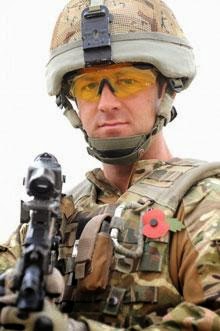
With today being Remembrance Sunday, the past week or so have seen the annual return of the Poppy appeal to our daily lives. In recent years, the image and event surrounding it has become implanted into everyday life - football clubs at every level of competition across the UK have committed to a minutes silence before the game, and to wearing poppies on their shirts, actively supporting the appeal; with a few notable objectors, and television personalities are coerced into wearing the symbol on many national broadcasts.

Wigan winger McClean claimed to have
'sparked fury' through his conscientious
objection to the appeal.
Such support however, and the bile thrown at objectors such as James McClean in backlash to his refusal to wear a Poppy is now bordering on fascism. Contrary to the belief of many, the appeal does not seek to commemorate those who lost their lives in the two world wars early in the century, but to donate money to all British servicemen living or dead. Since conscription ended in 1960, this amounts to support of all those people who chose, not people who were forced, to go to war. These wars include the attempts by Britain to retain control of Northern Ireland; the Falklands; their intervention in the four Iraq wars and the war in Afghanistan on the back of Bush's 'War on Terror' speech. Through the blanket imposition of the Poppy in national culture and daily life, the appeal attempts to drum up tacit consent to the actions of these people.

This attempt to use the plight of dead soldiers families and the legacy of the holocaust to create a feeling of support for the current actions of the armed forces amounts to fascism. Promotion of support particularly for Cameron's continued support of Israel abroad and further intervention into Iraq and Syria promotes imperialist notions which Britain should be trying to get away from.

But it's about helping the soldiers and their families. On the British Legion's Poppy appeal website, the goals of the Poppy appeal include helping, 'younger veterans who need employment and housing to live on.' Why should the British people support a system wherein working age veterans, who have left the military for one reason or another, require charity to afford housing? Support of the military in Britain today: a country which despite what the media propose is under no direct threat from outside invaders, and will likely continue not to be: amounts to support of a continued imperialist approach abroad, continued intervention in places like Northern Ireland and the middle east, places where past intervention only served to make things worse, and continued support of a system which does not even attempt to care for its veterans - it expects the public to do so through charity.

It is time to take off the Poppy, and to abandon support for militaristic regimes and those who support Britain's constant intervention in issues which it cannot and has not helped solve. What do you think? Please leave your comments in the discussion below.

Tuesday, 16 September 2014

Ian Paisley and other relics of the past

A recent article in the Guardian acknowledged the tributes to Ian Paisley after his death as being privy to the theory of 'live long enough and all is forgiven'. The media coverage surrounding his death focused on Paisley as a peacemaker, with David Cameron saying he would be remembered as the ''big man' of Northern Ireland politics' and would be 'greatly missed'. This is a far cry from the images of Paisley as a flat track bully, whose violent rhetoric inspired a far right stance amongst unionism throughout the early peace process. Further to this, the Reverend for a long time backed loyalist paramilitarism in its defence of a mid 20th century political system which even the staunchest supporter of the union would now admit was unjust and unethical. His passing is the passing of a relic which the political mindset of the North must move on from, but many others remain.

The death of Paisley and the obituaries which followed in the mainstream media, have highlighted many important ideas for those who hope the North can progress from its current malaise. His deposition by those who now run the DUP was well covered by the media earlier this year and shows the deep underlying issues which exist within the NI Assembly. As was heartily discussed at the time, Paisley had overstayed his usefulness to the DUP, faced with the rise of TUV they removed him so as to retain their position as the hardiest defenders of the union.

Success in the following election then allowed them to maintain a power base from which they instituted the Red Sky scandal, giving public finances to DUP donors whilst they destroyed housing executive property. Nelson McCausland (DSD minister at the time) further proved his superior usefulness in social housing trade offs with Sinn Féin, perpetuating the electoral majority of key party members, some of whom had led the deposition of the party founder.

This failure to progress to a consensus based system where parties set a joint agenda for the good of the people - as opposed to the current bilateral strategies based on maintaining the electoral relevance of green and blue parties is a deep wound in the system which sees no signs of healing under the leadership of the current incumbents of the OFMDFM.

Paisley's disposal at the hands of those who now lead the DUP has not however succeeded to maintain their unchallenged position as dictators of the agenda which the loyalist vote follows. Failures of the party to manage PR and promote new changes such as the removal of flags and symbols; growing multiculturalism in the North with the influx of new ethnocultural groups; and the secularisation of public policy with movements towards equal marriage based on sexual orientation has led to the growth of a new far right element in Loyalism. The growth of the 'Protestant Coalition' outlook from Loyalism is undoubtedly a consequence of disastrous management by an adversarial party in a political system based on progressive consensus and tolerance. This consensus, due to the leadership of Sinn Féin and the DUP has given way to stand off and trade off.

Peter Robinson was quoted earlier this week as saying the Stormont system was 'no longer fit for purpose' and he would look to the Westminster government to engage in further talks for a solution. This comes less than a year after the huge amount of money spent bringing in US diplomat Richard Haass offered no results in solving issues over flags, parades and dealing with the past. This unveils a basic incompetence in the leadership of the Stormont executive.

DUP failure to properly lead in the progressive changes to policy on flags and symbols which must take place to become a less confrontational society, failure to govern in a responsible way which benefits the people, and failure to come up with any solutions to the problems they are paid to solve leads to a simple conclusion. Paisley is a relic which the North are better moving on from, but he is not the only one, until the relics still sitting in the executive office on the hill are also disposed of, progress cannot be made. We can't however wait until they dispose of themselves as they did with the Doc, the people of the North must stand up to the relics in OFMDFM, in Sinn Féin and in the DUP and take a leaf from Reverend. Ulster must say no to the powers that be or we will 'never, never' move on and become the fantastic multicultural, tolerant society we believe we can be.

Wednesday, 3 September 2014

Is there an anti Islamic agenda in the UK?

Anyone watching the BBC news this evening would have seen their propaganda machine in full flow, in outlining of the structure of the Islamic State, quotes such as 'married to sister' were casually interspersed with the relevant information being conveyed - pictures of a crying British mother shown while a solicitor read a statement about her daughter's indoctrination into IS.

An executive who confirmed they would offer only humanitarian aid to fighters in Iraq only a few weeks ago are now fully involved in a system of air strikes against IS and the leaders of both government and opposition are proposing a tough response to the fighting; suggestions even being made that passports of UK muslims who travel to Syria could be revoked. We have always been at war with Eastasia.

This draconian response, cracking down on those who offer aid in Syria is not new, post 9/11 the Blair government used invocation of a state of emergency to pass the anti terrorism, crime and security act (ATCS act) - the most drastic reaction of any European state to an attack which took place on a different continent. The ATCS act allows the UK to indefinitely intern those suspected of 'terror charges' pending deportation, whether that deportation was granted or not. This new policy of revoking the passports of even British nationals suspected of such is an extension of the draconian, authoritarian school of thought in dealing with the threat of fundamentalism.

But is this reaction based on previous successes? Succinctly, no, since the ATCS act was brought in in 2001, stop and searches amongst the muslim community have increased drastically, anti immigration politics has come to the fore electorally and parties such as UKIP and the BNP have gained widespread support at local level. The demonisation of the muslim people in Britain as an 'enemy within' has been motivated by the increased securitisation and aggressive foreign policy implemented by the Blair government and now continued by the coalition.

This culture of fear has not been allayed in many cases by the mainstream media within Britain. Of course the main news outlets such as News International and BSkyB distribute a 'Fox-lite' geared towards the conservative elements within UK society, but other more traditionally balanced outlets such as the BBC fail in their depictions of society in many cases as well, as outlined in the beginning of this article.

Choudary on the Immigration Row
https://www.youtube.com/watch?v=pJxn8AYtfq8
There is a major issue in Britain at the minute with framing the arguments of fundamentalist Islam. In Channel 5's 'Big Immigration Row', muslim cleric Anjem Choudary was introduced to the audience as, 'radical muslim Anjem Choudary, hate figure to some as you may hear,' as jeers were thrown from the studio audience. Whilst the author would not give support to the perspective of Islam held by Choudary, framing him in this light drastically dilutes his ability to convey any perspective whatsoever, the message that the killing of Lee Rigby in Woolwich was at least partially motivated by the global nature of the 'war on terror' which Britain has got itself involved in. This lack of interest in understanding the motivations of radical Islam generates hate towards the normal, functioning members of British society.

The ignorance of the mainstream media in helping us understand the motivations of IS and others in a rational and balanced way remains a problem in the ongoing and escalating conflict, and allows for the situation to continue to escalate; with liberal values of the multicultural, tolerant society we aim to build giving way to securitisation and marginalisation of some within our communities. Bourgeois conservative David Cameron, hate figure to some as you may hear does not seem to be leading us out of this mess.

Do you agree? Leave your comments below.